What Do You Wear to Receive Life-Changing News?

What Do You Wear to Receive Life-Changing News?

There are moments in life when time stands still. When a simple medical appointment becomes the before and after of your story. When your heart beats so loud you can hear it in your ears, and your mind desperately searches for something, anything, to focus on so you don’t collapse.

For me, that “thing” was my clothes.

The Paralysing Moment: When Medical Uncertainty Hits

That morning I had a paralysing thought. What should I wear? What do people usually wear to receive a diagnosis like this one? I wanted to wear something that made me feel good, comfortable enough.

I know it sounds silly, but focusing on something so mundane helped me cope with all the thoughts that were going through my head.

When you go through this experience, you’re confronted with different thoughts and feelings. Reality hits with every new medical test you go through.

The truth is you’ll never be ready for this, but you can work on yourself mentally so you feel stronger.

The First Signs: When a Blood Clot Led to an Unexpected Discovery

About a month before that day, after following up on the results of what had caused a blood clot that resulted in an urgent hospital admission, I was told that I had an unusual growth in my collarbone. It looked like it could be something serious. I needed to be referred to a specialist because that particular hospital doesn’t treat the “C” word, if you catch my drift.

That was my first reality check, and some doctors can be so cold! Just be aware of this – it’s not you, it’s them.

“So if you could wait outside please, until we call you again because we don’t do this kind of thing here and we’re not sure who can help you, we need to make a couple of calls.” Probably he didn’t say it that way, but that’s how I heard it.

I’d never felt as helpless as I felt then. I went home with instructions to call every week to follow up and see if a more experienced doctor picked up my case or not.

The weeks that followed were filled with so much uncertainty and unanswered questions.

Whatever it was, I wasn’t willing to let it define me.

Processing the Fear: How I Gave Myself Permission to Feel

I won’t lie – a lot of different feelings invaded me. I locked myself in my room and I started crying. I allowed myself to go through everything I was feeling: so much to do, what about my dreams and plans? What about my son (about 5 years old back then)? How would he grow up without a mum? It’s not fair!

I gave myself three hours to feel miserable and angry. After that, I had to come up with a plan to face everything that was put in front of me.

Whatever it was.

Finding Hope: The Healing Journey Begins

I booked a session with an energy healer. I figured that I needed to listen to my body. The conclusion was to replace the feeling of helplessness with hope, the uncertainty with trust.  (this is really what helped me through).

I got inspired.

I started reaching out to other people that I knew had gone through a similar situation. One of these women was someone very dear to me, whom I’d never had the chance to meet in person. She passed away before we could cross paths, but her memory and the amazingly strong-willed woman she was remains. Breast cancer took her, but not without a fight, and when her children were old enough to fend for themselves. Despite a very sombre diagnosis where the doctor only gave her a few years left, she fought it for 28 years before she transitioned.

I was told she repeated affirmations in front of the mirror, being kind to herself and reassuring herself of the strong woman she was, who could face any decision that would save her life. That she was stronger than any diagnosis.

You can craft your own affirmations, but here are a few you can access for free >> affirmations

Reclaiming My Identity: I Am More Than My Diagnosis

I did the same and decided that I wouldn’t identify with any diagnosis, whatever it was. I am me, and what I’m going through doesn’t define me. It’s just circumstantial. My values and behaviours define me. I am me, I don’t like labels, I am not a certain kind of patient, with certain kinds of words or illness. I’m not ill, I have something that needs attention; the vessel of my soul needs attention and repair, that’s all.

Taking Control: Managing Medical Tests with Mental Strength

All the tests that followed were confronting. Since I had already processed and let my emotions flow, I had a plan of attack. I wanted to be in control of the things I could control: me and my emotions. I cut my hair short. It was falling anyway – not sure if it was because of the medicine, the amount of radiation I was putting my body through, or anything else – but cutting it short was the best decision.

People delivering the tests are so used and numbed to the words that I was asked a few times about where the failing part of my body was. In other times I would’ve reacted defensively, really badly, but I learned to be calm and in the present moment, responding always from a place of love and understanding.

Kind of weird. Was I finally growing up?

Finding Support: The Power of Not Going Through It Alone

When I walked into the specialist clinic, I felt supported. That whatever this was, I would find support. I didn’t have to do it alone at all, and I made a promise to myself that I wouldn’t feel defeated.

I focused on my breathing. Being “in the moment”. Right here, right now.

EFT (Emotional Freedom Technique) is always there to help me with anxiety. Brad Yates is one of my go favourites for this and even though I have developed my own EFT-inspired simplified method that works well with affirmations, I like his energy and programs. Here is the one for vibrant health, it is great to swap those feelings of helplessness with hope. Take me there>>>

In that appointment, the doctor said that results were inconclusive. More tests to follow.

Embracing Uncertainty: Living Fully Despite the Unknown

I read articles from Bruce Lipton’s website and listened to his advice in Youtube. People can recover from this. Science is amazing and I have the universe on my side.

But what if my time is really up? It isn’t really up to me, is it? I’m not in charge of those decisions. Even though I don’t want to go, I have so much to live for, but that’s something I can’t control. What I can control, on the other hand, is how I react to this.

Only one thing was certain

I was only sure of one thing. I wouldn’t let worry take control, and I had to make the most of my days. Enjoy life, be grateful for each day.

Always answering this question with a yes: “If today was my last day on Earth, would I be doing what I’m doing?”

The answer needs to always be yes, even if that day I was cleaning or doing laundry or working. I was sure that I was doing what I was supposed to be doing and loving life. Not scared or delaying decisions.

Mind-Body Connection: Healing Through Visualisation and Self-Care

I spoke to my body. I meditated with healing light. We are all in this together, no room for diseases. I visualised myself as healthy. I made a list of the things I needed to change and made a commitment to take better care of my body.

The Surgery Decision: Choosing Logic Over Fear

“We need to take your collarbone out.”

The doctor was surprised at how well I took it. For me, it was a no-brainer. I was already clear that I would surrender, that I would need to think with my head and not with my emotions.

My collarbone, unfortunately, was causing problems, and if I left it, it would’ve damaged a main nerve, a main vein, or crushed my lung.

It was an executive decision. If something is not working, you end it. We need to focus on the integrity and wellbeing of the majority.

I had to.

Facing Surgery: From Fear to Acceptance

It was going to be a risky surgery.

It was postponed a couple of times. I’m sure it was my energy – I didn’t want to go through with it once I learned all the risks. I was scared. What if I don’t make it?

I wanted to be with my son on his birthday.

Funny enough, the doctor scheduled the new date for surgery for the day after his birthday. I was ready then, for whatever the outcome. I was at peace and surrendered. It’s not up to me. I did everything I could do.

I just went through it and didn’t resist or question anything. I just kept a positive attitude.

I woke up.

Recovery and Reflection: The Lessons That Matter Most

No collarbone and my arm in a sling that I need to wear for the next six weeks.

I now focus on the lesson rather than the pain. My lesson is to stay in the present moment, to live and enjoy life a lot more, enjoy the sun on my face and the fresh air. You know, all the little things.

To deal with uncertainty, to make decisions regardless of the circumstances, to be practical rather than fearful, to keep cultivating inner peace because that will get you through anything.

What Really Matters: The Answer to My Original Question

So what do you wear to receive life-changing news?

The same clothes you always wear, because whatever the diagnosis is, the treatment, etc., those words won’t change anything – especially the way you decide to live your life.

If you want to wear something special, wear hope and trust.

Wishing you all the best.

With Love, Claudia

Peruvian Ceremonial Cacao: Benefits and How to Use It in a Cacao Ceremony

Have you ever wondered why some people are raving about cacao ceremonies ? As a Peruvian and a wellness enthusiast with an analytical background, I’ve dived deep into this ancient practice, and let me tell you – it’s not just another wellness trend. It’s a powerful tool for transformation that’s been used for centuries, and I’m here to break it down for you in a way that makes sense, even if you’re sceptical (trust me, I was too!).

The Ancient Wisdom Behind Ceremonial Cacao

Let’s start with a little history lesson, but don’t worry – I’ll keep it interesting! Ceremonial cacao isn’t your average chocolate bar from the supermarket. The ancient Peruvian civilisations knew something we’re only just rediscovering: cacao is medicine. They didn’t just grow it; they revered it, using traditional harvesting methods that preserved its sacred properties.

The difference between ceremonial cacao and commercial chocolate is like comparing a superfood smoothie to a sugary soft drink – they’re worlds apart!

Traditional ceremonial cacao is made from pure, unroasted cacao beans, usually sourced from small, sustainable farms in Peru. It’s typically prepared as a thick, bitter drink that’ll make your average dark chocolate taste like a sugar cookie. The key difference? The intention and preparation method, the ceremonial cacao, is prepared with purpose and reverence.

Why Ceremonial Cacao Could Be Your Next Wellness Game-Changer

Physical Benefits That Actually Make Sense

As someone who likes to verify everything, I can tell you that the physical benefits of ceremonial cacao are backed by more than just ancient wisdom:

  1. Heart health boost: it’s not just spiritual heart-opening we’re talking about
  2. Antioxidant powerhouse (way more than your regular dark chocolate)
  3. Steady energy without the caffeine crash (yes, please!)
  4. Mineral content that your body will thank you for

The Emotional and Spiritual Side (Even for Sceptics)

Now, I know what you’re thinking – here comes the woo-woo part. But stick with me! Even from an analytical perspective, the emotional benefits are fascinating:

  • Mood enhancement (there’s actual science behind this!)
  • Enhanced meditation – it’s like a shortcut to mindfulness
  • Connection to inner wisdom (or as I like to call it, enhanced intuition)

Making It Work: Sourcing and Preparation

Let’s talk about how to make this ancient practice work in your modern life.

Choosing Quality Ceremonial Cacao

Just like you wouldn’t put low-grade fuel in a high-performance car, you need to be choosy about your cacao. Look for:

  • Ethically sourced Peruvian cacao
  • Pure paste or blocks (powder is okay, but not ideal)
  • Fair trade certifications

Basic Preparation Method (That Anyone Can Master)

Here’s my simplified version that still honours the traditional practice:

  1. Start with 1-2 tablespoons of ceremonial cacao. – If you are getting the cacao in a block, just put it in your NutriBullet (or similar) to break it into smaller bits and store it in an airtight container. You can also use a grater  to shred it into pieces that can melt easily. Remember: it should never be boiled.
  2. Add hot (not boiling) water
  3. Blend until frothy
  4. Optional: add a touch of honey or maple syrup, cinnamon or a pinch of cayenne pepper.

Maybe just try a small amount first and see how your body responds... (I know I wish someone had told me this when I started!)

Creating Your Own Ceremony (No Experience Required)

You don’t need to be a shaman to create a meaningful cacao ceremony. Here’s how to start:

  1. Set up a quiet space (your bedroom works fine)
  2. Light a candle
  3. Set an intention (like “clarity on my career path”)
  4. Sip your cacao mindfully
  5. Journal or meditate for 15-20 minutes

When Nothing Seems to Happen

So it’s been a couple of weeks, and you’re not feeling the magic? Don’t worry, we’ve all been there! 

“I did everything right! I bought a certified Peruvian cacao, I set intentions, I even played meditation music… but I’m not feeling anything special. Maybe this whole ceremonial cacao thing isn’t for me…”

Okay, Okay. Let’s Go Bit by Bit

First, remember that everyone’s journey is different. Maybe you’re:

– Expecting too much too soon

– Not giving yourself enough quiet time to notice subtle changes

– Holding onto scepticism that’s blocking your experience

Going All In

Let’s dig deeper. Ask yourself:

– Are you truly open to the experience?

– Do you have hidden resistance to self-care practices?

– Are you rushing through instead of being present?

Remove Obstacles

Sometimes, the biggest obstacle is our own mindset. Start simple:

  1. Try different times of day, pick a moment that you feel you’ll be more receptive or not rushed.
  2. Experiment with your dosage
  3. Combine with practices you already enjoy (like yoga or journaling)

Everything that happens serves a purpose. Be patient and kind to yourself as you explore this ancient practice in your modern life.

Making It Part of Your Daily Wellness Routine

The real magic happens when you stop treating ceremonial cacao as something exotic and start integrating it into your daily life. Here’s how:

  1. Morning ritual: Replace your coffee with cacao once or twice a week
  2. Pre-workout boost: Small dose before yoga or exercise
  3. Mindful moments: Use it to enhance your meditation practice

Remember, you’re not just drinking chocolate – you’re participating in a tradition that’s thousands of years old. How amazing is that?

Your Next Steps

Ready to start your ceremonial cacao journey? Here’s what to do:

  1. Source high-quality cacao
  2. Start with a small amount
  3. Keep a journal of your experiences

The first step is knowing exactly what you want and living in alignment. Whether you’re seeking more clarity, creativity, or connection, ceremonial cacao might just be the tool you’ve been looking for.

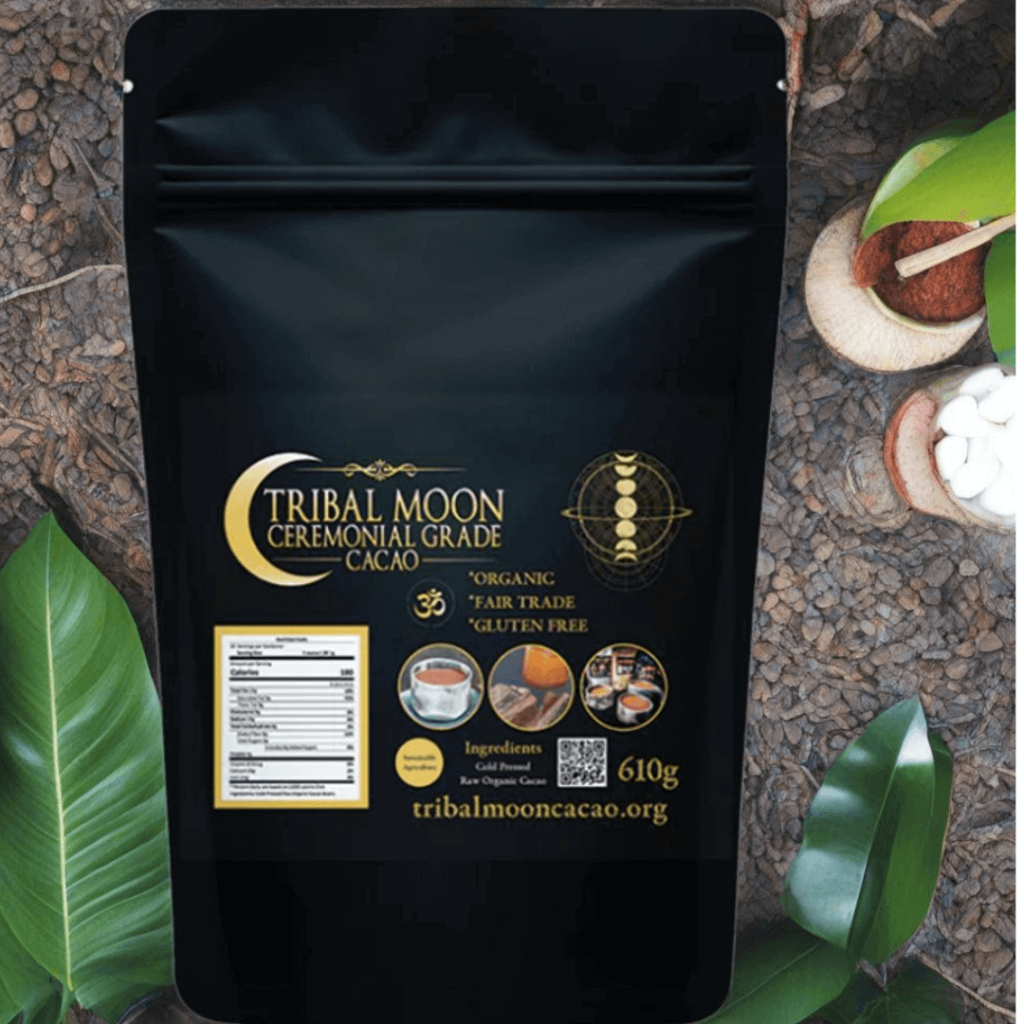
Your cacao journey is waiting! Get your Ceremonial Cacao delivered to Australia (local postage rates) and Internationally from my favourite supplier.

My top self-care tip to raise your vibration

Self-care to raise your vibration

Does this sound familiar? You’re feling stressed, mercury is in retrograde, the full moon is doing it’s thing and making you feel a little troppo. Nothing seems to be working well. Life is overwhelming. It’s not just one thing. It’s everything!!! I know this oh too well. It’s time to practice my self-care tip to raise your vibration.

Spirituality speaking, your vibration refers to your energetic state. Holistically including your thoughts, beliefs, your physical health and emotions. All these factors contribute to the integrity of your energy field.

When any one of these elements are not at optimal levels, your vibration will be lower and you’ll need to do some work to help lift you back up.

This is not all woo woo talk. This has to do with our fight or flight response to a perceived threat. When you feel stressed or threatened by an external source, that part of your brain gets activated and releases stress hormones that allow you to deal with the problem, either fighting that wild tiger off or heading outta there real quick.

This can be handy when there is a real threat, but not when the threat is created by our thoughts or perceptions of reality and stays with you for longer stretches of time. It takes its toll. So you have to take steps to switch your flight or flight off.


What to do to turn things around and raise your vibration

When I start feeling  “heavy”, like I’m carrying too many worries, negative thoughts, my interactions with people are starting to be less productive. Life feels overwhelming and it all just seems a bit too much.

I know it is time to reset. Cleanse and raise my vibration. I turn things around by enjoying some downtime in a beautiful warm bath.

I prefer to do this early in the morning, on a Sunday  at 6 AM, when everyone at home is still, and I know I don’t have to rush to be anywhere.


My tips:

  1. Fill the bath with warm water,  as hot you can, with enough water to be comfortable. Sprinkle a serving of Bath mix and drops of essential oils of your choice.
  1. Be sure not to take a shower after the bath so the essential oils can do their work.
  1. Repeat positive affirmations while in there, and practice mindfulness. Thoughts are just thoughts, just let them be, don’t push them away, let them go.


Here’s my luxurious recipe:

Salt bath with essential oils! (4 servings)

Ingredients

Instructions

  1. Combine salts and soda in a glass jar.
  2. Stir in desired essential oils.
  3. Store in cool, dark place.

It’s important to use only quality, high-grade essential oils. Be careful with cheap essentials oils as they can be either aromatic oils or synthetic oils, reducing the effectiveness of the bath. They still smell good, but they may be an irritant to the skin. You won’t achieve the same results, as plant extracts found in quality essential oils have healing properties.

The safest essential oil to use is Lavender


Relief of PMS symptoms

Coincidentally, I do this ritual every full moon. It may or may not be coinciding with PMS symptoms, but it is really therapeutic to alleviate these symptoms and nourish our bodies around that time of the month too.

In this fast-paced life, when we play so many roles and have to be and do ALL of ‘the things’, it’s so important to recognise when you’re needing to take some time out for you and replenish yourself.

Let’s face it, these things don’t come passively. We have to take time to lift ourselves up so we can achieve our goals and be there for those close to us.

If you’d like to experience my recommended quality oil blends, you can have a browse here. 

Note: You should always use essential oils with caution if you are pregnant, be sure to consult a professional. I recommend steering clear of all oils except lavender during pregnancy and always read the labels for contraindication. There are essential oils that are photosensitive, like Bergamot (I love the smell!!) , it’s recommended that you don’t have exposure to excessive sunlight for up to 12 hours if applied on the skin.

Easy Strategies to Help You Overcome Emotional Eating

Emotional eating is a common denominator of most of us, the serial dieters, the ones who had tried almost every diet under the sun, successfully losing weight but haven't been able to keep it off. Addressing it with these simple strategies will help you not turn into food to cope with negative emotions and achieve your healthy eating and weight loss goals.

Most of you know that I recently changed career paths and I am now 100% dedicated to my online projects. I’ve been toying with the idea of starting this website for way too long, and no matter how many times I put it on my vision board or my goal’s spreadsheet, I didn’t take action. I made hundreds of excuses, but the main issue was: resistance

Resistance

Resistance is a natural reaction, and I overcame it with hypnotherapy. Showing my brain that is okay to change paths, becoming aware of the blocks that didn't let me move forward and opening a communication line with my inner voice

But it wasn’t always that way.

One of the things I was doing to shut my inner voice up was eating, not just eating but binge eating. I could quickly go through half a big packet of chips without me realising it. In our first session, the hypnotherapist asked me if I listened to my inner voice, I replied: No, I shut it up with chips.

That was my first step

to realise that I was using food to deal with emotions, to make excuses, to procrastinate and to escape from a reality that was no longer serving my purpose.

Easy Ways to Stop Binge Eating
Photo by frankie cordoba on Unsplash

Emotional Eaters find it hard to stick to a diet.

I’ve been an emotional eater all my life and even though I’ve been successful in my desires to lose weight and haven’t manage to keep it off long term.

I know what to eat, I know about portions, and I know about combining food and I know I’m most successful when I follow a well-designed meal plan but what I didn’t know is how hard is to stick to a diet when you are an emotional eater and that until I address it, I’ll be a serial dieter all my life.

Emotional eating is about how food is used to shift an emotional state, using food as a coping mechanism

Food was comforting because at least for those short minutes that the binge lasted I didn’t have to deal with any emotions. Keeping my mind occupied munching on those chips gave me a way to cope with the moment.

But sure, there is a healthier way to do it. Then I went into finding ways to break this emotional eating cycle and it is possible!!

Become Aware

90% of our reactions are formed in our subconscious, mostly from learnt past behaviours and because the binge eating happens so quickly, we may not have time to notice it may respond to certain triggers and follow a pattern or motifs. Becoming aware of this patterns and themes is an important step to get a clear idea of the contributors will help you find your own personal way to deal with struggles.

These questions will help you monitor your emotions and triggers. Keep them handy, maybe in the notes section of your phone. Remember that there are no right or wrong answers, the purpose of this exercise is to identify what lead you to the latest episode of emotional eating.

What was happening that might have triggered that reaction? What emotion was I feeling? What were my thoughts at that moment? What physical sensations was I feeling?

Stop labelling food as good or bad.

Food is food, and all food is allowed, balance and moderation are recommended though. When we start thinking as a particular food as forbidden, like the chips in my case, our mind will focus on that specific food, and we will end up craving it. Resistance, ironically, will drive you to eat it and your brain will take it as you need it, but if you just look at food as neutral, not putting any limits or restrictions, there would be less of an issue with food cravings. Trust me on this one, it works!

Don’t eat unless you’re hungry

Yes, that’s a difficult one but learn to listen to your body and start recognising your body cues. You’ll soon begin to identify when you are hungry or when you just have the urge to eat due to emotions. When you have that urge, stop yourself on your tracks and drink a glass of water instead.

Once I read that when you feel like eating something and not knowing what you feel like it is a sign that you need to drink more water.

Check this post out on how water is essential in our lives and dehydration may lead to depression. I know, mind-blowing!

Cook and Eat Mindfully

Mindfulness is the practice of being present and aware of your thoughts, emotions and feelings. Eat mindfully means to be fully conscious of what you eat and the effects of the food on your body.

Show gratitude to the fact that you can cook with healthy ingredients and the food you are taking is nourishing your body. Being fully present at the moment of eating the food by noticing the colours, aromas, texture and carefully chewing each bite, tasting the different flavours.

This will also aid digestion because as Dr Victor R Benavides V, always says: “Digestion starts in your mouth.”

Mindset Shift

You are loved, you are worthy, you are safe. You've got this, and you can change your habits. Start by saying positive and nicer things to yourself. How many times we have looked our reflection in the mirror and said, “oh gosh! My bum looks too fat in these jeans”; sometimes we are too hard on the words we use to refer to ourselves, bringing us down and guess what, making us turn to food to cope with that sadness.

Showing kindness to yourself will increase your self-esteem, and you will start to make healthier choices.

Today’s Life: The World of Immediacy

stress, cortisol and why sometimes it is so hard to lose weight

HAVE you realised that the world around us is not the same one in which our parents or grandparents grew up in, without going very far, it is not the same world in which we were born?

I am 40 years old, I am an 80’s child and a 90’s teenager, media says I belong to the Generation X. We are a generation that was born analog and grew up digital, a complex one. I see this as having the upper hand, we understand many things of the past, and we navigate through the digital age without any problems.

By now you may be thinking what’s all these have to do with losing weight; well, we live in a “fast” world, a world where everything is advancing by leaps and bounds.  There is never time for anything, and when we have time for something, we are just exhausted, the only thing you want to do is nothing or maybe pour a glass of wine and watch some Netflix. Does it sound familiar?

This made me think that our grandparents may have had a more relaxed lifestyle, not depending on their phones, checking emails, the latest app, a Waze app to help to get to a destination in less time by avoiding traffic. If we look at our grandparent at our age, they seemed to have a quieter life than us. You can call it boring if you like, but I don’t think they had the same levels of stress that we do.

We live in a world of information technology, of immediacy; a world in which we cannot stop to have lunch without checking our phones, answering a work email, or we just can’t resist the temptation to photograph our food to publish it on social media and show the rest of the world what we are doing and how “happy” we are. We are dependent and stressed, prisoners of ourselves, not able to relax or travel without the need of documenting every single step.

The other day someone shared this picture with me.

Credit: John Blanding / The Boston Globe

This picture shows a group of people, most of them from my generation or younger, at an event on the street. Please take time to notice the lady that is observing the occasion with her eyes!  She seems to be enjoying what she is seeing. She is in the present moment and registering it in her in memory, as she used to do it all her life, as everyone used to do pre-mobile-phone-with-camera era. My first thought was:  “she knows how to enjoy the moment”.

What about the rest of the group? They all are looking at life through the screen of their phone, creating videos to add to the “never looked again” pile or “posting to my social media story” that will be deleted anyway after running out of space to store once it’s time to register the next event.

That made me realise that most of us just live without enjoying the moment.

Back to the losing weight part.  What do all these have to do with losing weight?

Well, a lot. This lifestyle of recording the next event, the rat race, technology, fast world, answering emails on our downtime, of being connected all the time, bring stress.

Stress is in the hands of a hormone called cortisol, also known as “the stress hormone”, this hormone is usually a great ally or an enemy. Depending on the case, it helps us to face situations of tension: the flight or flight mode; or be present in emotional situations turning into frustration, anxiety or anger. The negative part of these last three ones is that if these sensations become chronic, they can seriously affect our mental and physical health.

Cortisol is also the culprit of not having success on losing weight, regardless of the number of times we tried, you can’t go past the three kg mark and after lots of efforts. And even worse, after deciding to quit that diet you put those three hard lost kg back on or more!

Among many other conditions, the excess of cortisol usually produces insulin resistance, which will lead our body to accumulate fat and, as consequence obesity, depression, high blood pressure and even autoimmune conditions. These situations will be the key to open the diabetes door.

Every time we are stressed, the cortisol hormone is activated making it challenging to lose weight.

Stress is part of lives and in small quantities is even needed;  it should not be seen as totally bad, it gives us the extra push to deal with a situation but it is essential to have a balance and make sure we put techniques in place to deal with stress.

Here are some tips to deal with stress and keep the keep your cortisol at normal levels

#1

Go offline: it is unbelievable how convenient mobiles phones are. Everything at our fingertips, literally, but some of us depend too much on it that seems we can’t breathe without it.  I challenge you to make the decision of not looking at your phone for at least three hours straight.  I know, #fomo!  But being connected all the time can also be a stressor. Give your mind a rest and go without it. Focus on another activity like listening to music, dance and disconnect. The benefits of music are endless, connects you with memories and can take you on a journey.  Join our playlist here.

The iPhone has a  “do not disturb” feature when activated only your favourite contacts can reach you. Allow yourself some time off, you deserve it.


#2

Improve your sleep – some people claim that they can survive on 4 hours sleep with no issues, but the lack of sleep can lead to poor health and decrease our resilience. Experts recommend at least 8 hours of sleep per day to allow our minds and bodies to recover.  One good tip to improve your sleep is to make your bedroom a pleasant room to be in: don’t accumulate clutter and reduce electronics.

You can improve your health by sleeping.


#3

Ground yourself in the Present Moment – mindfulness techniques are perfect for this. Be fully present in what you are doing by tuning into your senses.  One useful and straightforward mindfulness method to ground you in the present moment is the 5 to 1:


Look around and describe 5 things you can see. 4 things you can touch. 3 things you can hear. 2 things you can smell. 1 thing you can taste.


#4

Breathe!  Stand with feet a shoulder-length apart.  Take3 slow and deep breaths using the diaphragm muscles. Breathe in through your nose, and breathe out through slightly parted lips. Get the oxygen flowing into every little inch of your body and with every exhale let all the worries out.


#5

Catch up with your friends: spending time with friends reduces cortisol levels and gives you a sense of connection regulating other functions of your body. Make time to go out with your friends,  is excellent medicine.